Driving innovation and collaboration in community development
How Hennepin Planning Grants spark innovation, foster partnerships, and shape resilient communities
Hennepin Planning Grants (HPG) have been a cornerstone for fostering partnerships between Hennepin County and local cities to address land use and development challenges since 2008. The program emphasizes creating human-centered environments through compact, multi-use development that fosters walkability, biking, and transit, while reducing greenhouse gas emissions and promoting climate resilience.
Recent research from Urban3 confirms the impact: dense, multi-use development patterns, such as those supported by HPG funding, deliver higher value per acre compared to auto-centered places.
This collaborative spirit is evident in recent projects for Golden Valley and Hopkins, where through the HPG program, cohesive visions for pedestrian friendly communities with a strong sense of place were set in motion.
But the grants provide more than just financial support. Each grant includes access to consultants and resources like design workshops, which bring together city and county staff and multiple experts to review draft plans. These collaborative sessions challenge teams to think beyond silos, sparking innovative ideas that strengthen community design.
“The design workshops foster a uniquely collaborative environment in service of the projects,” said Laura Shagalov, a partner and architect with Van Meter Williams Pollack and consultant on multiple HPG projects. “The HPG consultants bring their various specialties and experiences to the table in a refreshingly open dialogue with the project team. The workshops are a testing ground for ideas mid-process and invite fresh perspectives.”
A notable example of HPG’s influence is the Rogers Main Street Master Plan, which was a 2025 HPG awarded project, and is wrapping up in spring of 2026. Rogers has rediscovered its historic downtown as a critically important piece of the community. While the city is growing quickly, much of that growth is centered on Main Street, bringing new development and economic pressures that must be integrated into a long-term vision.
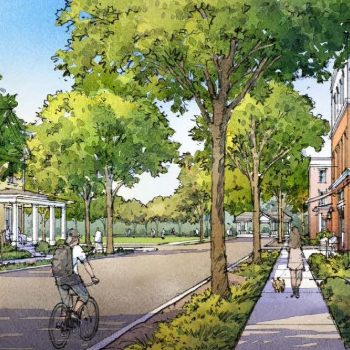
Patrick Brunner, a principal with Cardo, an urban design and town planning firm, explained: “The goal of the Master Plan is to ensure that this neighborhood continues to be the heart and soul of Rogers, by planning for reinvestment and development that prioritizes the pedestrian and the commercial vitality of Main Street. We want to keep the cherished small-town feel residents love but also allow for a full range of housing types, public spaces, and civic uses all in the same area.”
The plan aims to create a vibrant, pedestrian-friendly Main Street that reflects the values of the community and supports local businesses. It will study new housing options, integrate a city government campus, and leverage public-private partnerships to maintain historical character while improving buildings for decades to come.
“Without the funding, it is very unlikely the city would have been able to create a plan as detailed and focused as the one drafted,” said Brett Angell, Roger’s Community Development director. “Beyond financial support, the grant fostered partnerships and collaboration that identified new opportunities.”
Design workshops have also played a critical role in shaping the plan.
“Design Workshops are an excellent way to overcome the old adage of ‘standing too close to the elephant,’” Brunner explains. “We believe that a good idea belongs to no one, and these sessions help unlock good ideas. They can also provide reassurance to our team and our client, confirming the best path forward.”
HPG projects don’t just create plans, they shape the future of communities, ensuring they are vibrant, connected, and resilient. For Rogers, the Main Street Master Plan represents a commitment to preserving its historic heart while embracing growth and innovation.