ARS advocacy beyond the courtroom
We often use the phrase “holistic advocacy” to describe the work of Adult Representation Services. But to the wider community, it might not be easily understood.
Here at ARS, it means we do more than just provide an attorney or give legal advice. We have staff who help our clients with needs above and beyond what brought them to court in the first place.
“With any system involvement, there’s context to it,” said Patrick Taylor, legal services specialist supervisor. “For example, when someone loses their housing, it’s not the only thing they may lose at that time. It’s their overall stability that’s disrupted.”
Clients in crisis with complex legal cases often have other issues or county services to navigate, and it can be overwhelming. That’s where the ARS mantra of “holistic advocacy” kicks in. They support each client as a whole person with unique needs, helping them find stability and success beyond an individual legal case.
Client resource advocates (CRAs) at ARS jump in to provide short-term intervention and support based on the client needs. The CRAs can help a client connect to county benefits, find a food shelf, enroll in therapy, or sign up for housing vouchers—whatever short-term supports might help stabilize them so they can focus on their court case.
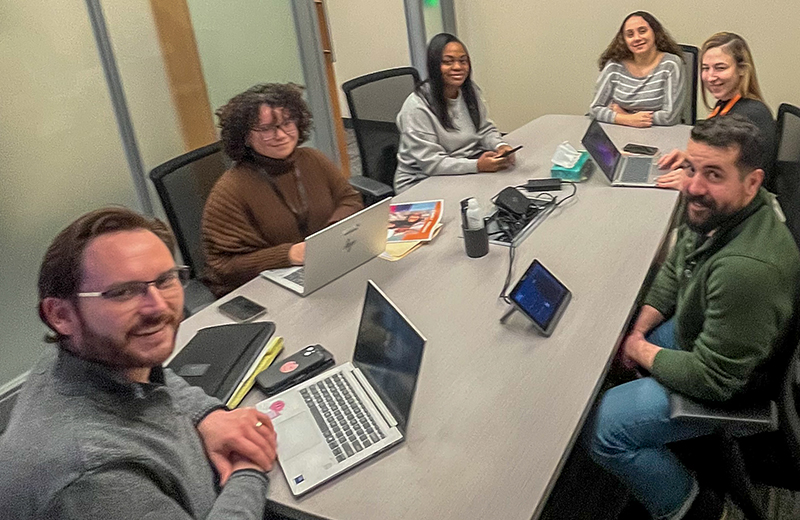
ARS client resource advocates and legal services specialists
The aim is “to be an in-person presence to help client navigate those resources quickly,” Taylor said.
Taylor and Bernadette Casey co-manage a 10-person team of CRAs and legal services specialists. Where the CRAs assist with immediate client needs, the legal services specialists work with attorneys to address more long-term needs tied to the court case.
Casey likened the team’s contributions to be social work in nature, working alongside attorneys supporting clients in areas impacted by their legal proceedings.
“These are really stressful moments in our clients’ lives,” she said. “We focus on a client’s goal of getting a case closed, but to get it wrapped up in a way that they don’t need us anymore. So, we become this intense support during a crisis period, but not a person they’re going to call in 10 years.”
There is one notable difference between the ARS staff and other professionals, such as social workers, teachers, therapists, and medical providers, Casey said. All ARS staff operate under attorney-client confidentiality. “Most of our clients have not worked with professionals who aren’t mandated reporters. We are not, so that makes building rapport much easier.”
That said, Casey noted, ARS is part of Hennepin County and is “seen as part of the system,” which for some clients can cause apprehension. It’s important to reassure clients “that we are here for you, you are the boss, and you tell us what you need.”
March 18, 2026