Life as a law clerk
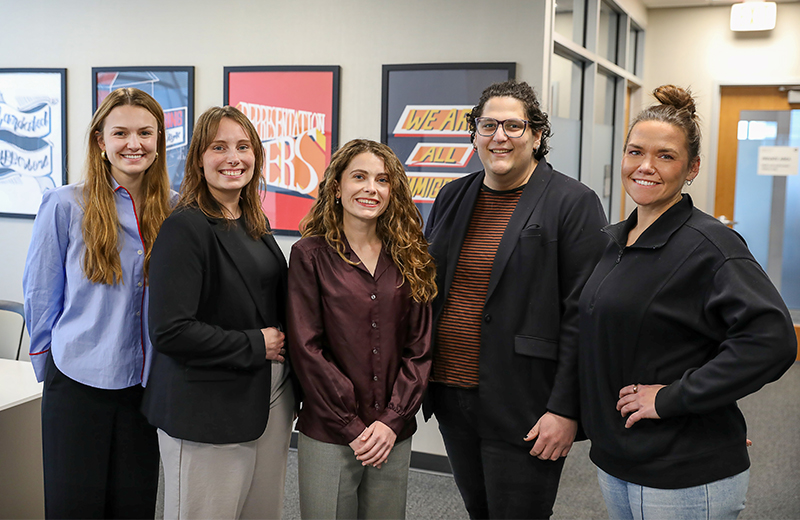
Pictured left to right: Law clerks Claire Girod, Elise Swenson, Mary Leniton and Teresa Padrón with supervisor Lauren Pockl
For the law clerks at Adult Representation Services (ARS), there’s no such thing as a typical day – and that’s exactly what they love about the job.
One day, they might conduct legal research, write memos, or gather client information; on another, they may shadow attorneys, join client meetings, or appear in court.
Such wide-ranging experience is what makes the program stand out. "Our clerks aren’t just observing," said Lauren Pockl, ARS appellate attorney and law clerk supervisor. "They are engaging in the work of public service lawyering in a meaningful way."
The clerks come from different places, backgrounds, and universities, but they all share a passion for public interest work.
"Working with ARS attorneys has shown me what it means to zealously advocate for clients," said Claire Girod, a University of Minnesota law student who started her clerkship in 2024. "Everyone in law should give back to their community, and this is a great place to start."
Learning with real-world impact
Five to six law clerks work at ARS at any given time, usually for one to two years, while attending law school. In that time, they rotate through five practice areas: civil commitment, housing, parent representation, guardianship, and community impact.
Since beginning her clerkship last summer, Mary Leniton has learned everything from basic recordkeeping to trial strategy and cross-examination techniques.
"This experience has been invaluable for developing practical legal skills, which are not a primary focus in law school," she said.
Leniton came to law school with a passion for child advocacy. At ARS, she got to work closely with parents at risk of losing custody. "I now have a much better understanding of why it’s so important to hold the system accountable when parental rights are on the line."
University of Wisconsin law student Elise Swenson was drawn to ARS’s immigration and parent representation areas. During her clerkship, she got to help an immigration client stay in the U.S. on parole: "I assisted the attorney with country condition research and drafted arguments for why our client would be unsafe returning to her country of origin."
Beyond the casework itself, Swenson’s experience at ARS helped her develop her work style. "I was able to hone my legal and client communication skills and feel confident in stepping out into the legal world as an attorney."
Supporting attorneys, serving the community
Attorneys often have limited time for in-depth legal research and writing. That’s where clerks play a key role. "We provide the investigative support attorneys need to push the envelope on novel or complex arguments," said University of Minnesota law student Teresa Padrón.
Along with that behind-the-scenes work, the clerks gain courtroom experience as supervised attorneys. As an ARS clerk, Padrón represented several clients in court, including appearing in a contested guardianship case: "The arguments I made helped the client retain control of his personal property, which was one of his main goals in fighting the guardianship in the first place," they said.
ARS clerks not only help the attorneys do their jobs better, they also benefit the broader community.
"Our clerks contribute directly to improving outcomes for people in Hennepin County," said Pockl. "They learn at a high level, make a real impact, and leave the program exceptionally prepared for the practice of law."
April 8, 2026