Food rescue gets surplus food to people in need
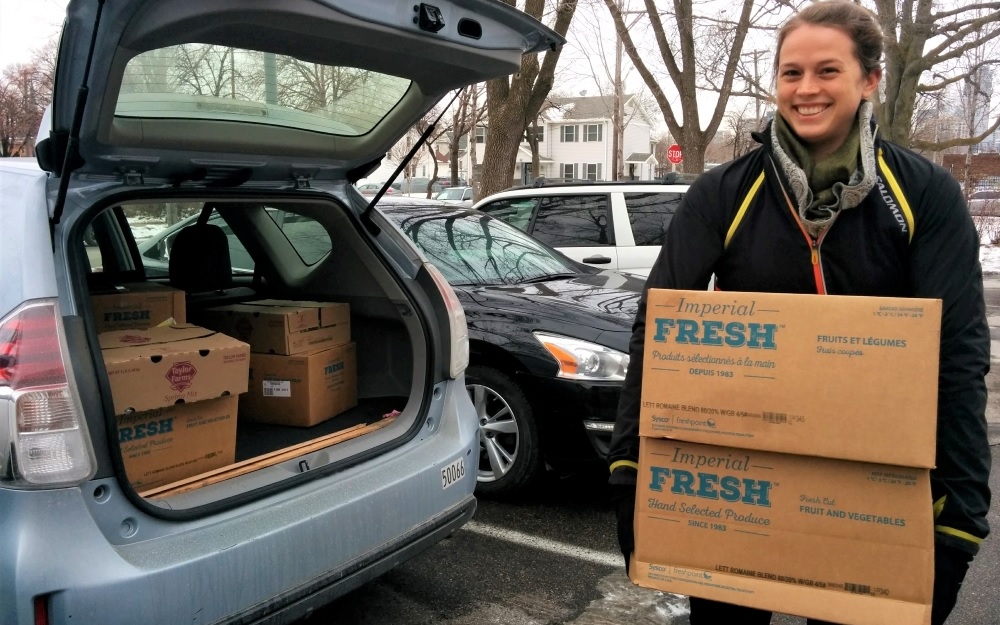
Each year in the U.S., 63 million tons of food are wasted, representing around 15% of the total waste generated.
In Hennepin County, we know from waste sorts that 20% of our trash is food. On average, 3.5 pounds of food are wasted per person per week. Of that waste, two-thirds is potentially edible.
As a leader in waste management, the county is focusing on reducing food waste. It’s one of the single most effective solutions to address climate change.
Using the food we have helps people and the planet

Wasting food has upstream climate impacts.
When we waste food, we waste the energy used to grow, produce, transport, and store food products. Food sent to landfills creates methane, a powerful greenhouse gas and driver of climate change. The U.S. Environmental Protection Agency has found that food waste in landfills contributes more methane emissions than any other landfilled materials.
According to Project Drawdown, reducing food waste has the potential to draw as much as 94 gigatons of carbon dioxide out of the atmosphere.
Supporting food rescue
To support and expand the food rescue system, Hennepin County offers food rescue grants to food security or food recovery organizations.
Grants awarded in 2026
Hennepin County awarded 8 food rescue grants totaling $300,000 for 2026. The following food security organizations received funding:
Learn about the food rescue grants.
Grocery stores and restaurants
For grocery stores and restaurants, the county requires businesses that produce a certain about of trash to divert food waste to organics recycling or non-trash outlets. They are also encouraged to donate surplus food to local organizations to feed people.
Residents
 For residents, the county encourages volunteering to rescue food. Give your time to help pick up food from grocery stores or help sort rescued food at a food shelf.
- Pick up and deliver surplus food through TC Food Justice. Sign up for a reoccurring or one-time pickups.
- Help distribute rescued food at a local food shelf. Find one close to you with the food resource map.
- Create meals for those in need from rescued food with Community Kitchen or Loaves and Fishes.
Food rescue system research and recommendations
 Hennepin County conducted research in 2022 to understand the food rescue system in the county. This research included interviews, focus groups, and surveys with organizations involved in the food rescue system and community members who have experienced food insecurity.
Recommendations for Hennepin County
In the transition to an equitable, zero-waste future, Hennepin County is poised to have a meaningful and transformative impact on the food rescue system. Through engagement and analysis, 14 strategies were identified for the county to pursue to ensure this impact. These strategies fit into the following recommendations:
- Expand on-the-ground support for donor organizations to operationalize and improve food rescue efforts in their organizations.
- Establish internal and external collaborations focused on continuous improvement of food rescue and county supports.
- Leverage data to promote food rescue efforts and identify system-wide improvement opportunities.
- Work with food rescue and security partners to implement creative and innovative strategies to enhance food rescue efforts and community impacts.
- Embed disparity reduction and racial equity throughout the design and implementation of county strategies.
Read the food rescue in Hennepin County report (PDF).
Other actions

Create meals, not waste: Planning ahead to reduce food waste
Reducing food waste is a surprisingly powerful climate solution. Making changes in your kitchen and when you go shopping can significantly reduce the amount of food that goes to waste and save you money.

Eat the food you buy: Storing food to make it last
The cost – and impacts – of rotten apples, spoiled vegetables, leftovers that never get eaten, and questionable half carton of milk all adds up. Fortunately, there are many ways that we can store food different to make sure it gets enjoyed instead of going to waste.