Staying safe in the heat and humidity
 Summer heat and humidity can be dangerous , especially for those with underlying health conditions or who work or exercise outdoors.
It’s important to be prepared and stay healthy for hot days as climate change brings more frequent extreme weather.
Stay informed about weather conditions
If you are working, playing, or exercising outdoors, it is important to understand how hot and humid days will impact you.
- Stay informed about heat alerts, which are issued by the National Weather Service (NWS) and publicized by local media.
- If you are planning to be active outdoors, check your local weather forecast. Use the National Weather Service HeatRisk page to help the current and forecasted heat risk where you live.
Stay safe in hot weather

Take the following steps to keep yourself cool and safe when temperatures rise:
Cold-water cooling
You can use cold water or ice to stay cool in various ways, including:
- Showering or bathing
- Place damp or frozen towels on your body
- Spraying yourself
- Immerse your feet
Dress for heat
- Wear light, loose-fitting clothing
- Light-colored clothes will reflect light and keep you cooler
Eat for heat
- Drink plenty of water to help your body cool itself
- Eat water-rich foods like vegetables, fruits, and drinks with lots of water
- Avoid diuretics like coffee and tea so your body can retain more water
- Eat smaller, but more frequent meals to reduce stress on your body
- Avoid heavy, fried foods or big meals
Heat-healthy changes
- Sleep closer to the ground level of your home if possible. Cool air settles in lower levels and toward the floor
- Avoid heavy exercise or labor if possible
- Give yourself plenty of breaks if you need to be active
- Use light sheets or blankets for bedding
Stay connected
- Keep others safe by not leaving children or pets in hot areas
- Check on elderly neighbors or those who live alone
Protect your Health
Be aware of risk factors that may make you more sensitive to extreme heat.
People with certain health conditions and on certain medications may be at increased risk. This includes people with high blood pressure, heart disease, and mental health conditions like depression and schizophrenia.
Medications and drugs can increase your risk of heat-related illness including:
- Caffeine in coffee and tea
- Heart medications
- Psychiatric medications
- Common pain medication
- Antihistamines
- Alcohol
- Stimulants
Talk to your healthcare provider or pharmacist about your medications and how you can protect yourself in hot weather.
Cool your home
Keep your home safe and comfortable when temperatures rise.
Fan and air conditioning
- Use fans to safely move cool air around your home up to 95 degrees indoors
- Maintain air conditioning filters to maximize efficiency and improve air quality
- Set your air conditioning or thermostat to 72 to 78 degrees to keep your home safe and cool while decreasing your energy bill
Ventilate
- Allow cool air to enter the home at night and close windows when it’s hot
- Blow air out a window to allow cooler air to move into the room
- Weatherize your home to block hot air drafts
Block sunlight
- Cover sunny windows
- Open shades at night to radiate heat outside
- Install or extend outdoor awnings to create shade
- Limit use of lights, cooking equipment, and computers
- Consider cooking early in the day or in the evening
Safety with no power
- Store refrigerated medications in a tightly sealed, waterproof bag in a cooler
- Check on your neighbors, especially the elderly and young
- If you are on life saving devices that require electricity, check with your utilities ahead of time to have your power prioritized
Find a place to stay cool
If you can’t cool yourself, go to a library, community center, or shaded park. Malls or indoor retail centers can be a good spot to be active and cool.
Hennepin County maintains a list of places to cool off in extreme heat.
Recognize the signs of heat-related illness
The Minnesota Department of Health provides information on recognizing the signs of heat exhaustion and heat stroke.
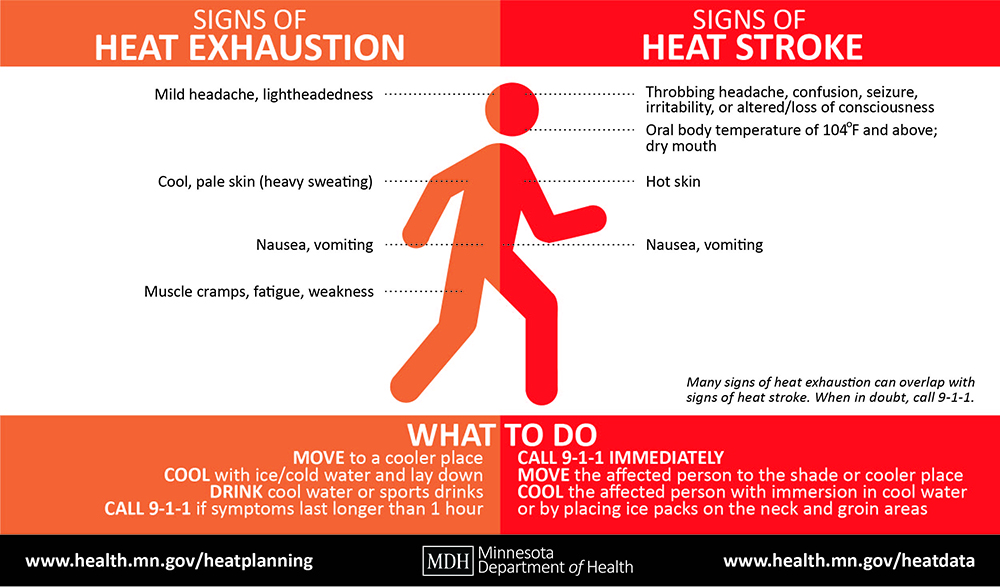
Heat exhaustion symptoms
- Mild headache or lightheadedness
- Cool, pale skin with heavy sweating
- Nausea or vomiting
- Muscle cramps
- Fatigue
- Weakness
What to do if you have heat exhaustion symptoms
- Move to a cooler place
- Cool down with ice or cold water
- Lay down
- Drink cool water or sports drink
- Monitor symptoms and call 911 if symptoms last longer than 1 hour
Heat stroke symptoms
- Throbbing headache
- Confusion
- Seizures
- Irritability
- Altered or loss of consciousness
- Oral body temperature of 104 degrees F or above
- Hot skin
- Nausea or vomiting
What to do if you have heat stroke symptoms
- Heat stroke is an emergency, call 911 immediately
- Move the affected person to the shade or cooler place, cool the person with cool water or ice packs while awaiting emergency services.
Other actions

Staying cool in the summer while saving energy
Staying cool in your home in the hottest months of summer while conserving energy isn’t as hard as you may think. Making your home more energy efficient means you can stay comfortable and save money, even in the warmest months.

Preparing for winter weather in a changing climate
Minnesota winters provide a variety of exciting opportunities – whether that be sledding, ice skating, skiing, or curling up under a blanket. But winter also presents many hazards we need to prepare for – including extreme cold, snow, and ice. Learn ways to make sure you are prepared to stay safe this winter.