
Environment
Reducing household hazardous waste
You can take simple steps to decrease exposure to toxic chemicals at home. Learn how to read labels and choose the least toxic products, how make your own non-toxic cleaners and how to properly use, store and dispose of hazardous products, to lessen your exposure to chemicals. You can keep yourself and your family safe, potentially save money and reduce the amount of household hazardous waste that you have for disposal.
Reducing hazardous chemicals and green cleaning recipes (PDF, 3MB)
Learn to read labels
These days it seems like every product comes with a warning, so you may not pay much attention to the words on the label. However, reading labels is the easiest way to identify hazardous products. When shopping for household products, choose the least hazardous product for the job.
Signal words
Descriptions on labels will tell you how hazardous a product is.
- Caution – mild to moderate hazard
- Warning – moderate hazard
- Danger – extremely flammable, corrosive or highly toxic
- Poison – highly toxic, harmful or fatal if swallowed
Characteristic words
Other words indicate the type of hazard pose by a product. They are usually found after the signal word on the label.
- Flammable/Combustible – product can easily catch fire and support a flame.
- Corrosive – product can burn the skin or eyes. It can also deteriorate other materials with which it comes into contact.
- Toxic – the product is poisonous and can be harmful or fatal if swallowed, inhaled or absorbed through the skin.
- Reactive – product may react violently or produce toxic gas if combined with other substances.
Find additional information in reducing hazardous chemicals and green cleaning recipes (PDF, 3MB).
Make your own cleaners
You can protect your health and the health of your family, pets, and the environment by making your own cleaning products with simple, less-toxic ingredients. Making green cleaners can also be an effective way to reduce packaging waste. Many common household products, such as baking soda, lemon juice, vinegar and liquid dish soap, can make effective and inexpensive cleaners.
Reducing hazardous chemicals and green cleaning recipes (PDF, 3MB)
Recipe cards to mix up cleaners:
- All-purpose cleaner (JPG, 1MB)
- Dishwasher detergent (JPG, 1MB)
- Laundry detergent (JPG, 1MB)
- Fabric softener (JPG, 1MB)
- Toilet bowl cleaner (JPG, 1MB)
- Unclog and deodorize drains (JPG, 1MB)
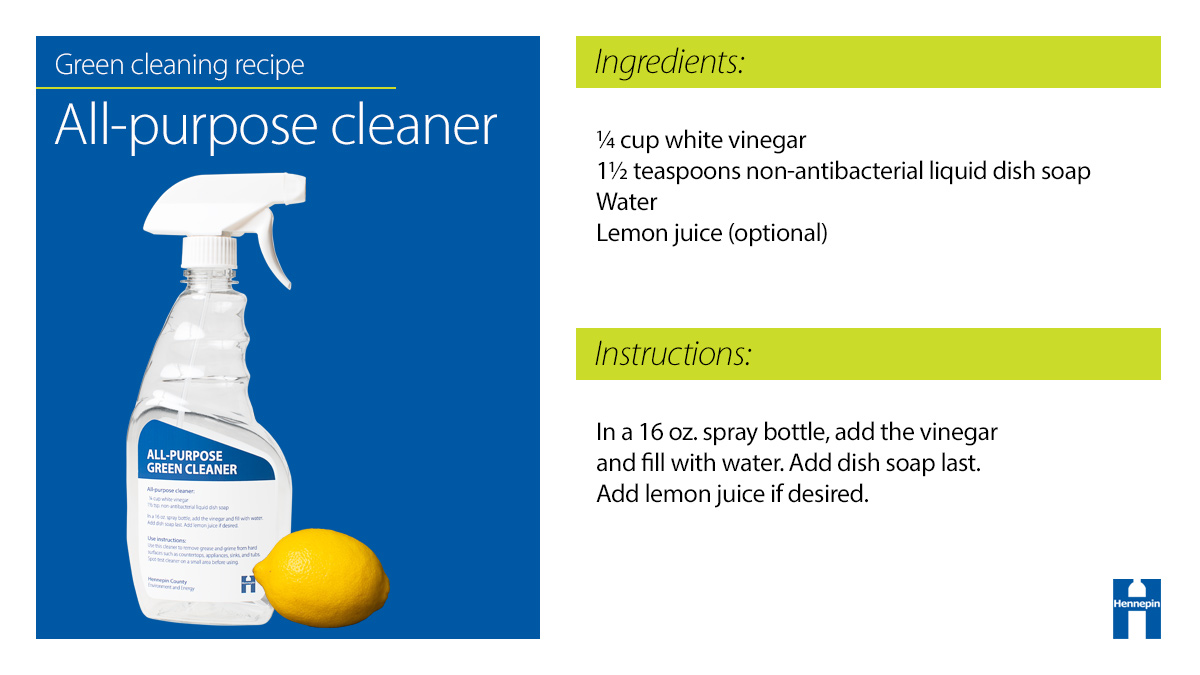
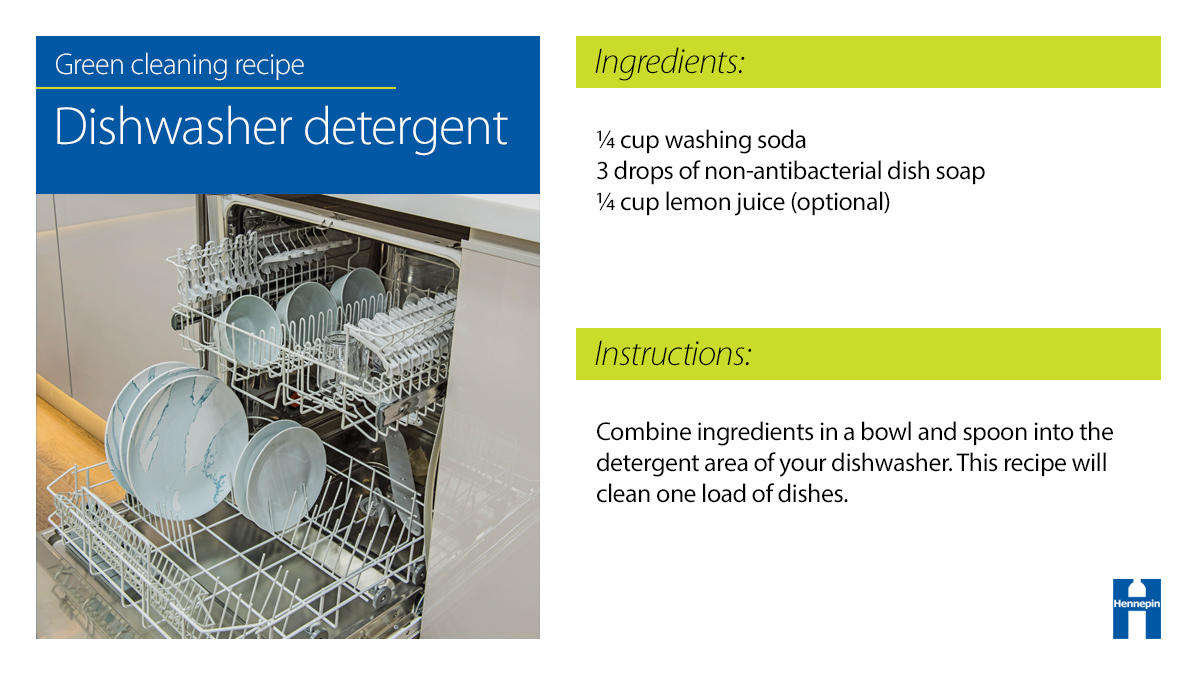
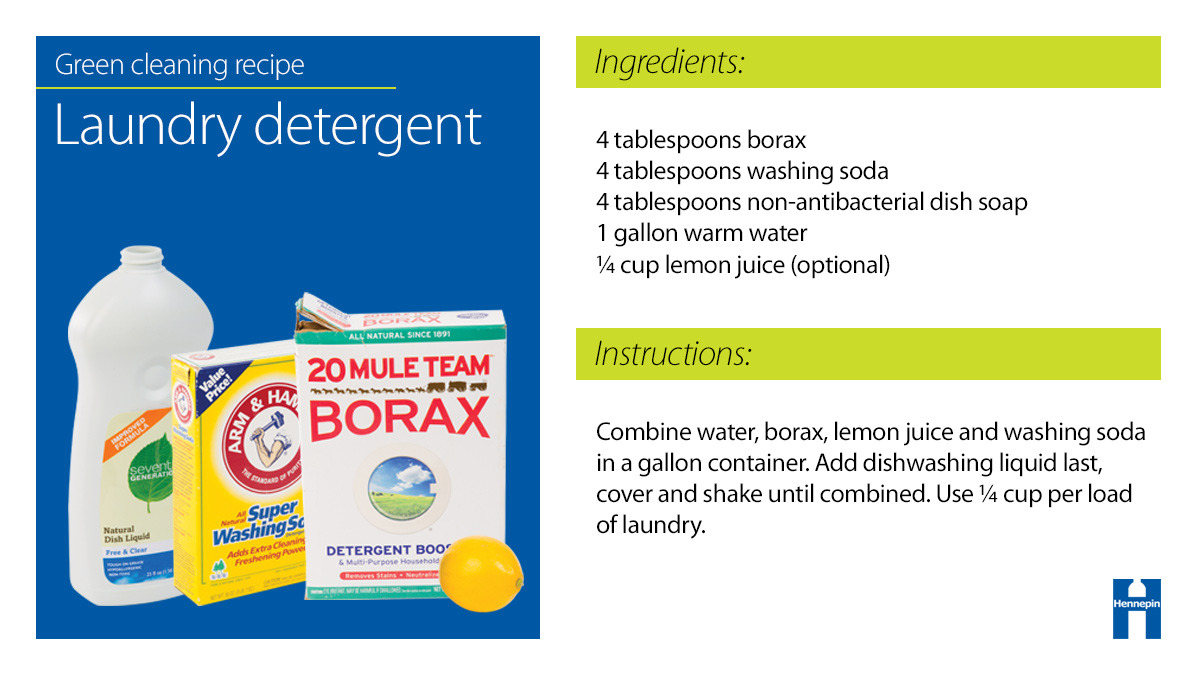
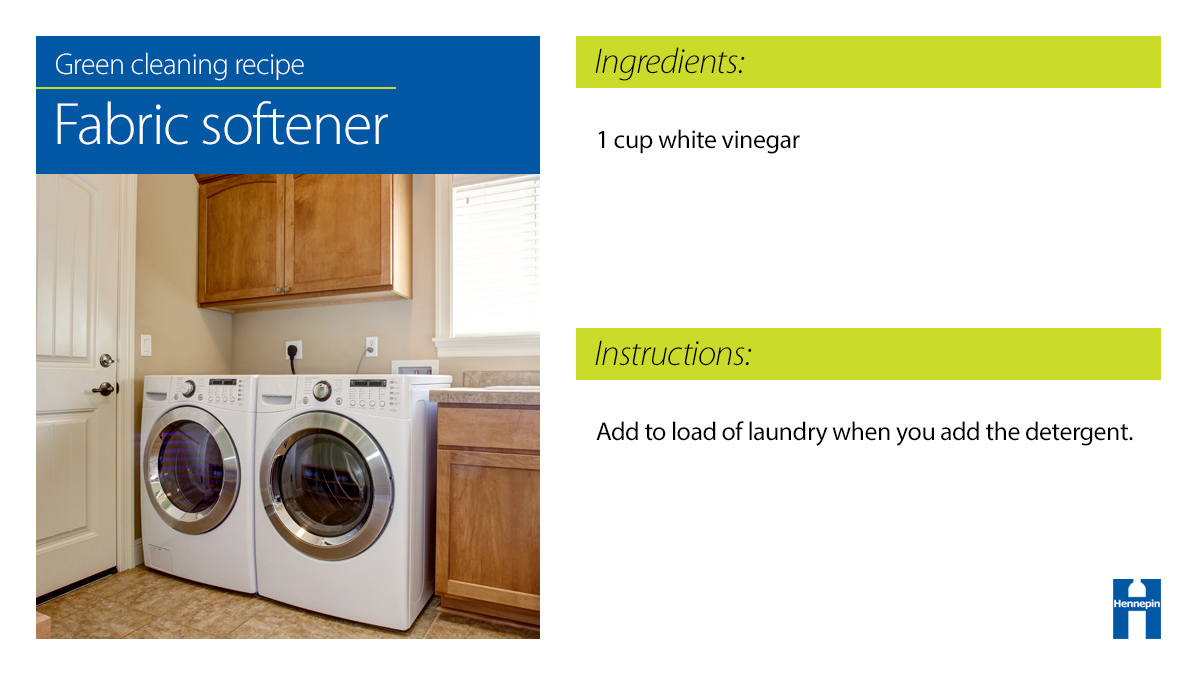
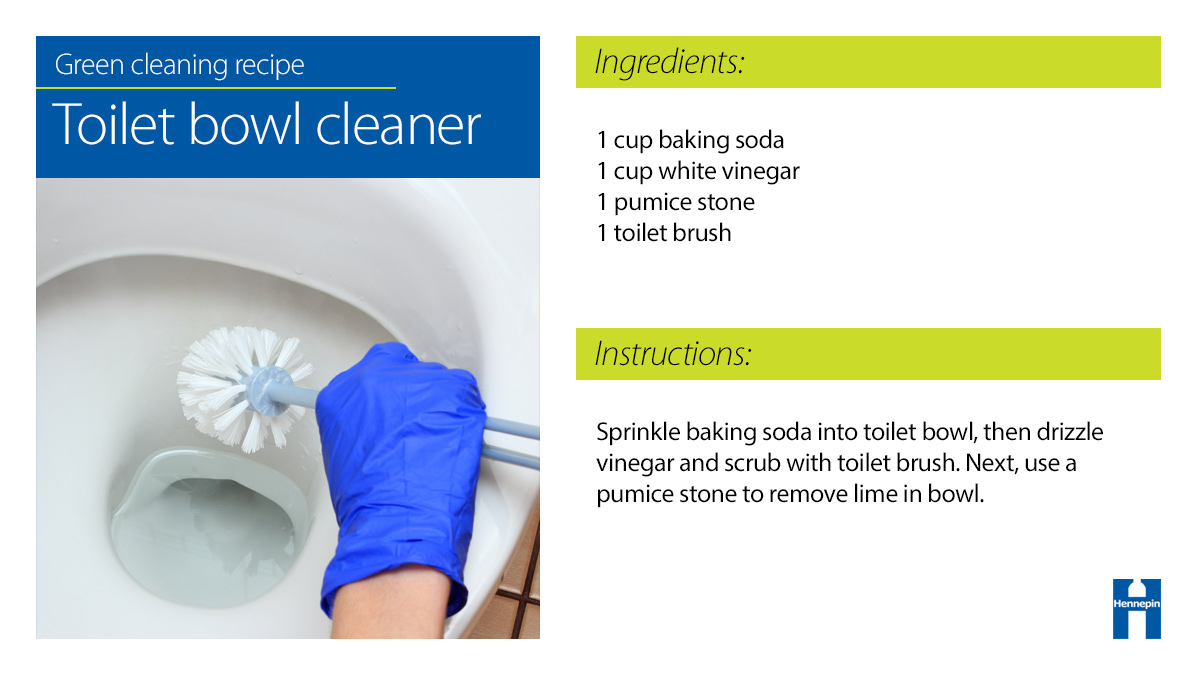
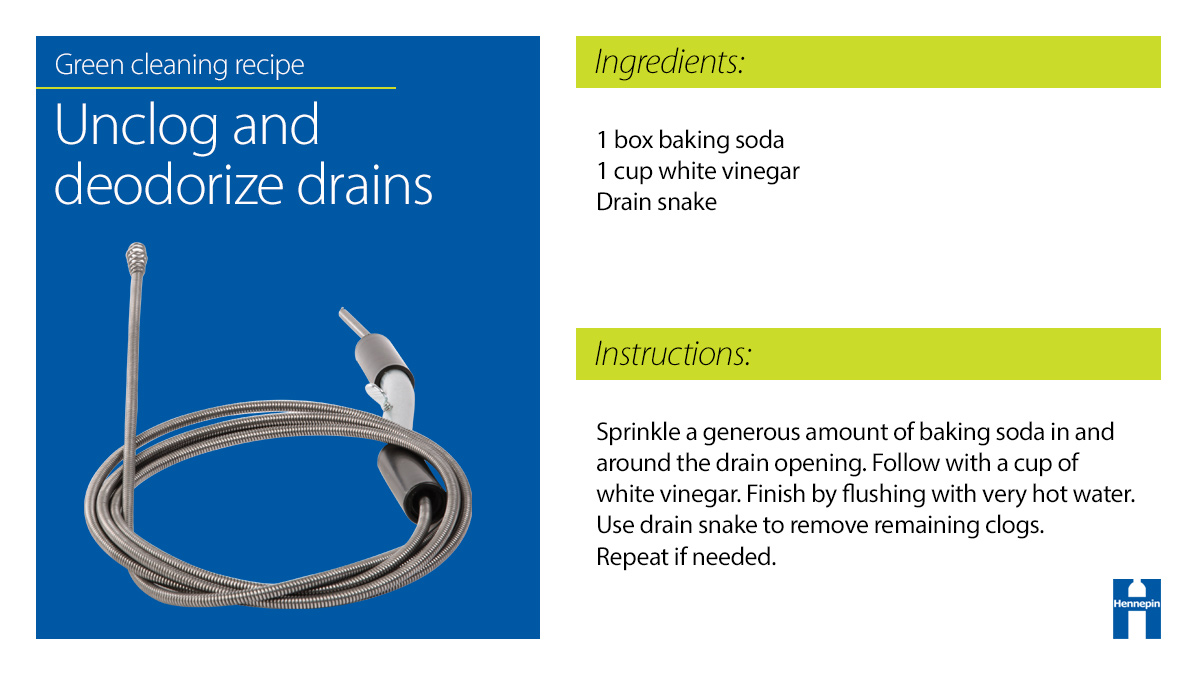
If you do make your own cleaners, make sure to label the containers with the ingredients.
If you want to share with others, use our green cleaning media kit (DOCX, 3MB) to access graphics, an example newsletter article, and social media posts.
Safely use, store and dispose of products
Use up your products
- Buy only what you need.
- Use all of the product or give it to someone who can.
- Read and follow label instructions. Use the right product for the job and use the only the amount that you need.
Store products properly
- Store out of the reach of children.
- Store in a dry place. Don’t let products freeze.
- Store away from heat.
- Store away from food.
- Store in original container and make sure the original label is intact.
- Do not mix products together.
Properly dispose of household hazardous waste
Household hazardous wastes should not be thrown in the trash. Household hazardous waste can cause harm to the environment and human health if not disposed of properly.
If products are unusable or you don’t know anyone who can use them, take them to a Hennepin County drop-off facility for proper disposal. See the Green Disposal Guide for more disposal options.